



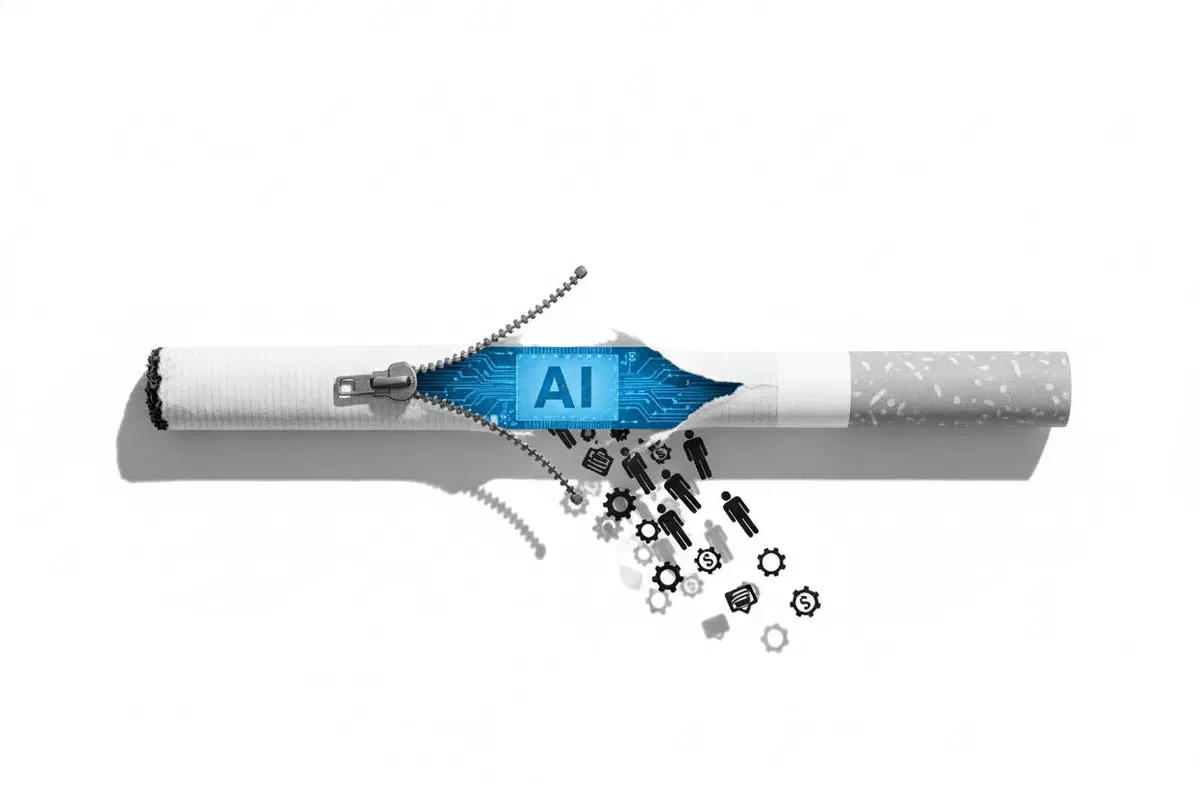
British American Tobacco (BAT) has announced a sweeping corporate restructuring that will eliminate approximately 9,000 jobs globally. The FTSE 100 tobacco giant, maker of Dunhill and Lucky Strike, confirmed the massive workforce reduction as part of a desperate bid to streamline operations, integrate artificial intelligence, and pivot away from its declining combustible cigarette business.
Chief Executive Tadeu Marroco framed the historic contraction as a mandatory "transformation programme" to build an agile, technology-enabled organization. The restructuring aims to secure GBP 600 million (KES 102 billion) in annualized cost savings by the end of 2028, reflecting deep anxieties within the tobacco sector over long-term viability amid plummeting cigarette sales and tightening global regulations.
Dissecting the 9,000 Role Reductions
The scale of the layoffs reveals a ruthless operational shift. BAT is permanently removing 5,500 internal positions across multiple international markets, including the UK, Poland, Romania, Costa Rica, Mexico, Singapore, and Malaysia. An additional 3,500 roles are being excised from the payroll and outsourced to strategic partners. Notably, BAT’s United States subsidiary, Reynolds American, remains entirely unaffected by this round of cuts.
| Restructuring Metric | Details & Targets |
|---|---|
| Direct Terminations | 5,500 internal employees permanently removed. |
| Outsourced Roles | 3,500 positions shifted to external contractors to reduce liability. |
| Financial Target | £600 million annual savings by 2028 (£500 million realized by 2027). |
| Geographic Impact | Heavy cuts in Europe, Asia, and Latin America (US market excluded). |
Funding the Shift to Smoke-Free Alternatives
The underlying catalyst for the layoffs is the terminal decline of traditional smoking. With BAT forecasting a 2 percent contraction in global cigarette volumes, the firm is racing to transition its revenue base toward non-combustible alternatives, such as Vuse vaping devices, Velo nicotine pouches, and Glo heated tobacco. BAT aims to derive more than half of its total revenue from these products in the near future.
However, this transition has faced regulatory roadblocks. Sluggish licensing and approval processes for novel nicotine products have delayed key launches. The job cuts serve as a financial buffer to protect shareholder dividends while BAT navigates this hostile regulatory landscape.
The Accenture Partnership and AI Integration
A central pillar of BAT’s survival strategy relies on corporate automation. Through a lucrative partnership with technology consultancy Accenture, BAT plans to deploy advanced AI solutions to absorb workloads previously handled by thousands of human employees. Interim Finance Chief Javed Iqbal linked the restructuring directly to becoming "more digital and AI-focused," betting that algorithms can manage supply chains and marketing compliance faster and cheaper than internal teams.
African Markets Brace for Impact
The tremors of this 20 percent global reduction will inevitably reach Africa. BAT Kenya, a major hub exporting to over a dozen African nations, faces potential job losses as London mandates AI integration. Furthermore, local regulators remain highly hostile to BAT's smoke-free pivot. In Kenya, the Pharmacy and Poisons Board and the Ministry of Health have cracked down heavily on nicotine pouches, threatening the very products BAT is cutting its workforce to fund.

Digital Content Creator & Vape Industry Analyst
Jake Miller is a prominent voice in the American vaping community, known for his transparent, tech-focused approach to harm reduction and hardware innovation. With over six years of experience in the industry, Tyler transitioned from a hobbyist to a full-time content creator, building a loyal following through his unfiltered reviews and deep-dive technical tutorials.